Korean Skincare Routine Steps: The Complete Guide to Glowing, Healthy Skin
If you've ever searched for the Korean skincare routine steps and felt overwhelmed by ten products, two routines, and a hundred ingredient names, you're not alone. The famous 10-step Korean skincare routine looks intimidating — but here's the secret most guides bury: it's not a daily checklist you must complete. It's a menu you build from.
This guide walks you through every step in the correct order, shows you exactly how to split the routine between morning and night, gives you a realistic beginner version, and helps you customize it for your skin type — all in plain language, with no product pushing.

Why Korean Skincare Works: The Philosophy Behind the Steps
Before the steps, understand the thinking — because that's what makes the routine different from the Western "wash, treat, moisturize" approach:
- Prevention over correction. Korean skincare treats skincare like dental care: daily maintenance now so you need fewer dramatic fixes later.
- Hydration is the foundation. Many K-beauty products focus on adding water and hydration to the skin rather than stripping oil away. Dewy, bouncy skin comes from being well-hydrated, not from being scrubbed clean.
- Thin to thick layering. Products go on in order of texture, thinnest first, so each layer can absorb properly before the next seals it in.
- Gentle and consistent beats harsh and occasional. The routine favors low-irritation formulas used daily over strong treatments used sporadically.
None of this requires buying ten products today. Keep reading and you'll see how to start small.
The 10 Korean Skincare Routine Steps, in Order
Here is the full classic routine, step by step. Under each step you'll find what it actually does, who needs it most, and how to use it correctly.
Step 1: Oil Cleanser
An oil-based cleanser (usually a balm or oil) is massaged onto dry skin to dissolve sunscreen, makeup, and excess sebum. Oil dissolves oil — which is why this removes things water-based cleansers can't fully lift. This step matters most in the evening; most people skip it in the morning.
Step 2: Water-Based Cleanser
The second cleanse — a gentle foam or gel — washes away sweat, dust, and any residue from step 1. This "double cleansing" is the signature of the routine, but the key word is gentle: your face should never feel tight or squeaky after washing.
Step 3: Exfoliator
Exfoliation removes the dead skin cells that make skin look dull and block product absorption. This is a 2–3 times per week step, not a daily one. Chemical exfoliants (like AHA or BHA) are generally kinder than harsh scrubs, and over-exfoliating is one of the fastest ways to damage your skin barrier.
Step 4: Toner
Korean toners are usually hydrating, not astringent — think of them as the first drink of water after cleansing. They rebalance the skin's pH and leave the skin slightly damp so the next layers absorb better. Pat toner in with your hands rather than swiping with cotton for less waste and less tugging.
Step 5: Essence
Essence is the step most unique to K-beauty: a lightweight, watery treatment packed with concentrated hydrating ingredients. It's thinner than a serum but more active than a toner. If you've heard of the famous "first treatment essences," this is that category — a hydration booster that preps skin for targeted treatments.
Step 6: Serum or Ampoule
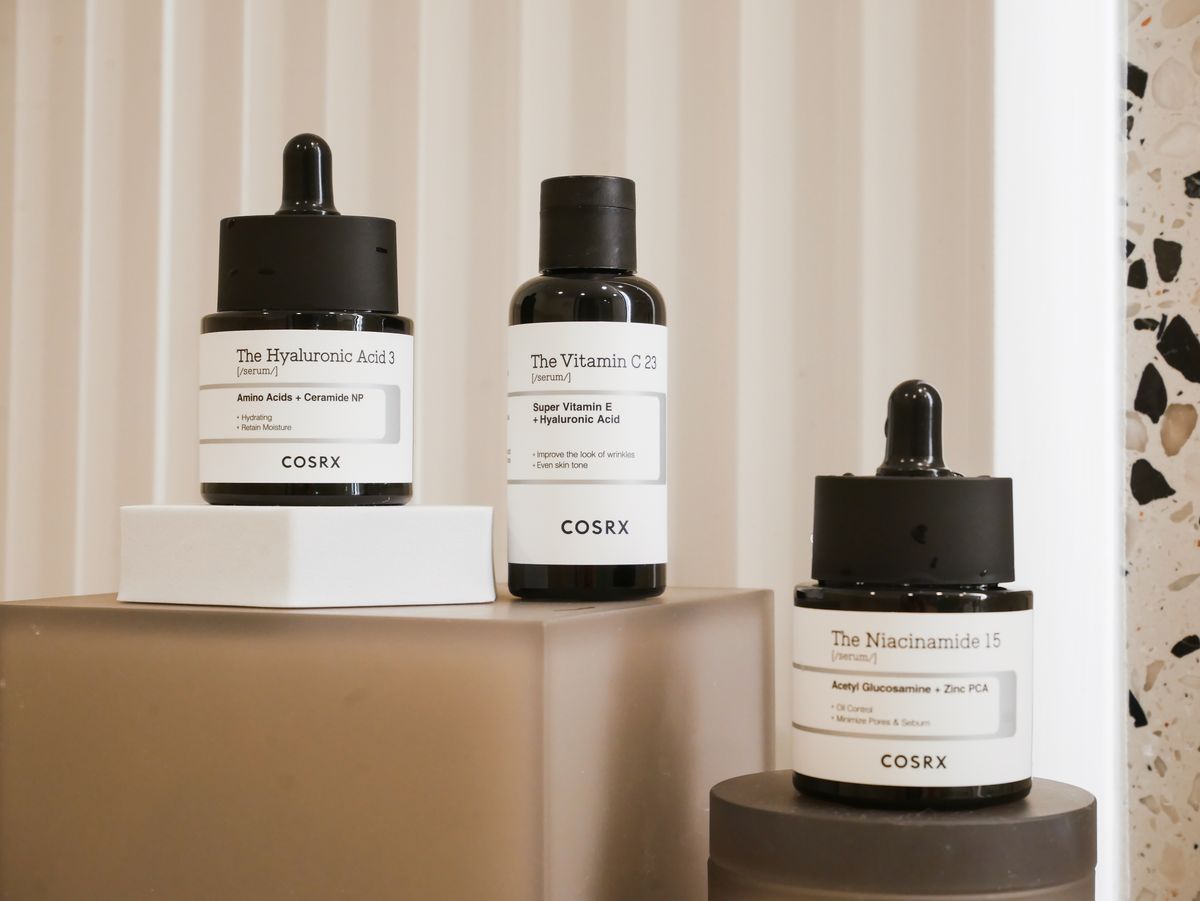
Serums (and the more concentrated ampoules) are where you target specific concerns: dullness, dark spots, fine lines, or dehydration. Common ingredients include niacinamide for brightening and pores, hyaluronic acid for hydration, and vitamin C for glow. One well-chosen serum beats three random ones.
Step 7: Sheet Mask
Sheet masks are an occasional 1–2 times per week boost, not a daily step. A serum-soaked sheet sits on the face for 10–20 minutes, giving ingredients extended contact time. They're best in the evening when you have time — and skip them if your skin is currently irritated.
Step 8: Eye Cream
The skin around your eyes is thinner and shows dehydration first. A small amount of eye cream, gently patted (never rubbed) with your ring finger, keeps this area moisturized. Start this step in your twenties as prevention rather than waiting for fine lines to appear.
Step 9: Moisturizer
Moisturizer seals everything underneath it — that's its real job in this routine. Lighter gel formulas suit oily skin and mornings; richer creams suit dry skin and evenings. If your skin still feels dry an hour after your routine, your moisturizer is too light for you.
Step 10: Sunscreen (Morning) or Sleeping Mask (Night)
The final step depends on the time of day. In the morning, broad-spectrum sunscreen is non-negotiable — UV damage undoes everything the other steps built, and it's the single most proven anti-aging product that exists. At night, a sleeping mask or richer night cream locks in the evening routine while you sleep.
Morning vs. Night: How to Split the Routine
You do not do all ten steps twice a day. Here's the sensible split:
Your Morning Routine
Mornings are about hydration and protection: gentle cleanser (or just a water rinse), hydrating toner, essence, a light serum like vitamin C or niacinamide, eye cream, light moisturizer, and sunscreen as the final step. Skip the oil cleanse, exfoliator, and sheet mask in the morning.
Your Evening Routine
Evenings are about deep cleansing and repair: oil cleanser, water cleanser, exfoliator (2–3 times weekly), toner, essence, treatment serum, sheet mask (1–2 times weekly), eye cream, and a richer moisturizer or sleeping mask. No sunscreen at night — it has nothing to protect you from while you sleep.
A quick rule of thumb: morning protects, night repairs.
The Beginner Version: Start With 4 Steps, Not 10
Here's the honest truth most K-beauty marketing won't tell you: a simple routine you follow every day will outperform a ten-step routine you abandon after a week. If you're starting from zero, begin with this core:
- Gentle cleanser (evening; morning can be a rinse)
- Hydrating toner or moisturizer
- Treatment matched to your main concern (optional at first)
- Sunscreen every morning
Do that consistently for a few weeks. Then add one step at a time — essence for hydration, or a serum for a specific concern — waiting about a week between additions so you can tell which product is doing what. This "one at a time" rule also makes it easy to spot the culprit if something irritates your skin.
Customizing the Routine by Skin Type
The 10 steps are a template; your skin type decides the textures.
Oily or Combination Skin
Choose lightweight layers: gel cleansers, watery toners, gel moisturizers. Don't skip moisturizer — dehydrated oily skin often produces more oil to compensate. Niacinamide serums are popular for this skin type because they help with the look of pores and excess shine.
Dry Skin
Go richer at every layer: cream cleansers that don't foam much, milky toners, hydrating essences with hyaluronic acid, and cream moisturizers — plus a facial oil or sleeping mask at night in colder months. Layering multiple thin hydrating steps usually works better than one heavy cream alone.
Sensitive Skin
Fewer steps, gentler formulas. Look for fragrance-free products and ingredients like centella asiatica (cica), which Korean skincare uses widely for calming. Introduce actives like exfoliants and vitamin C slowly and at low strength, and always patch test first.
Acne-Prone Skin
Double cleansing actually helps here — leftover sunscreen and sebum clog pores. BHA (salicylic acid) exfoliants suit this skin type, used 2–3 times weekly. Avoid heavy occlusive layers over active breakouts, and resist the urge to add many new products at once when your skin is already inflamed.
Ingredient Spotlight: What's Actually Worth Knowing
You don't need a chemistry degree, but recognizing these names helps you choose products with purpose:
- Niacinamide (vitamin B3): brightens dull skin and refines the look of pores; suits most skin types.
- Hyaluronic acid: draws water into the skin; works best applied to slightly damp skin.
- Vitamin C: brightens and supports an even tone; use in the morning under sunscreen for best effect.
- Retinol: the most evidence-backed anti-aging ingredient; start low, use at night, and always pair with daytime sunscreen.
- Centella asiatica (cica): a calming Korean staple for redness and sensitivity.
One caution: don't combine strong actives (like retinol and strong exfoliating acids) on the same night when you're starting out. More is not better — irritation is the enemy of glow.
Common Mistakes to Avoid
- Starting all ten steps at once. You'll never know which product helps or hurts. Add one at a time.
- Skipping sunscreen. The most common reason routines "don't work" is unprotected sun exposure undoing the progress. The American Academy of Dermatology's skin care basics emphasize sun protection as foundational — and they're right.
- Exfoliating too often. Daily exfoliation thins and sensitizes skin. Two to three times a week is plenty.
- Using too much product. A pea-sized amount of serum and a dime-sized amount of moisturizer are usually enough. Overloading layers causes pilling and wastes money.
- Chasing someone else's routine. A routine that works for dry skin in winter won't suit oily skin in summer. Customize, don't copy.
- Expecting overnight results. Skincare works on the skin's renewal cycle — give any new routine several consistent weeks before judging it, and take progress photos in the same lighting so you can actually see the change.
Your Routine, Your Rules
The Korean skincare routine steps give you a proven framework: cleanse thoroughly, hydrate in thin layers, treat with purpose, seal it in, and protect from the sun. But the framework serves you, not the other way around. A four-step routine you love will always beat a ten-step routine you dread.
Start with the beginner core, add steps one at a time, listen to your skin more than to trends — and browse our Beauty section as we add more K-beauty guides for every skin type and concern.
Frequently Asked Questions
Do I have to do all 10 steps every day? No. The full routine is a menu, not a mandate. Most people do 4–6 steps daily and use the rest (exfoliator, sheet masks) a few times a week.
What order do Korean skincare products go in? Thinnest to thickest: cleansers, exfoliator, toner, essence, serum, sheet mask, eye cream, moisturizer, then sunscreen (morning) or sleeping mask (night).
Can I mix Korean products with Western brands? Yes — the layering order matters more than the brand origin. Just introduce new products one at a time so you can spot any irritation.
Is double cleansing necessary every morning? Usually not. An oil cleanse matters at night when you're removing sunscreen and makeup. In the morning, a gentle cleanser or even a lukewarm water rinse is enough for most skin types.
How long before I see results from a Korean skincare routine? Hydration improvements can show within days, but visible changes in tone and texture need several weeks of consistent use. Patience and consistency matter more than the number of steps.
Does the Korean skincare routine work for men too? Absolutely. Skin is skin — the steps, order, and ingredients work the same regardless of gender. Many men do well with the simplified 4-step version.
2 Comments